 Alessandro Romano · 2 April 2025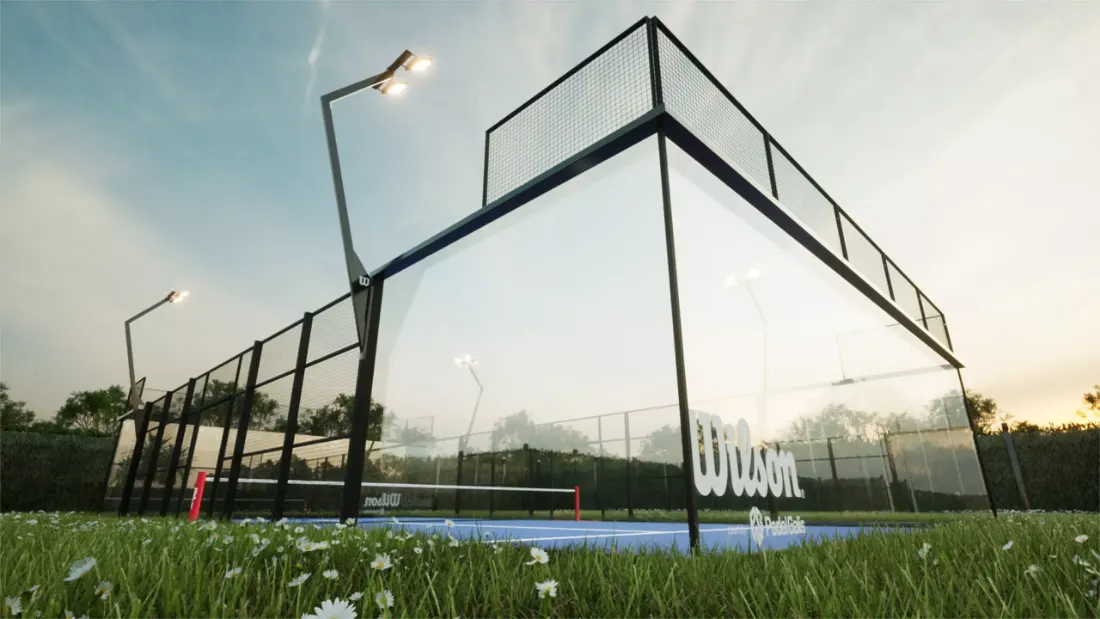
Padel is a fast-growing sport that combines elements of tennis and squash, played on an enclosed court with walls. Knowing the right dimensions and sizing is important for building or playing on an official court. This guide explains the official size in both feet and meters. It also compares padel courts to pickleball and tennis courts.
Padel Court Dimensions in Feet
A standard padel court measures 66 feet long and 33 feet wide, creating a rectangular playing area. The court is enclosed by glass and mesh walls, which are integral to the game. The service boxes are located within this area, and the net divides the court into two equal halves of 33 feet by 33 feet.
The surrounding walls also play a crucial role in padel, allowing for strategic rebounds and extended rallies. The back wall is typically 10 feet high, while the side walls gradually decrease in height toward the net.
Key Measurements in Feet
- Total court length: 66 feet
- Total court width: 33 feet
- Service line distance from net: 21 feet
- Net height at center: 34.6 inches (2.88 feet)
- Net height at posts: 36.2 inches (3.02 feet)
- Back wall height: 10 feet
- Side wall height: 6.6 feet (decreasing toward net)
- Total playing area: 2,178 square feet
Padel Court Dimensions in Meters
For those using the metric system, a padel court size is 20 meters long and 10 meters wide. These measurements are consistent across all professional and amateur padel courts worldwide. The net stands at a maximum height of 0.88 meters (34.6 inches) at the center and 0.92 meters (36.2 inches) at the posts.
The back walls measure 3 meters (9.8 feet) in height, while the side walls transition from 3 meters to 2 meters (6.6 feet) as they move toward the net. This unique wall structure makes padel different from other racket sports.
Key Measurements in Meters
- Total court length: 20 meters
- Total court width: 10 meters
- Service line distance from net: 6.4 meters
- Net height at center: 0.88 meters
- Net height at posts: 0.92 meters
- Back wall height: 3 meters
- Side wall height: 2 meters (decreasing toward net)
- Total playing area: 200 square meters
What is the Height of a Padel Court?
The height of a padel court varies depending on the structure of the enclosure. The playing area is typically surrounded by walls with a height of 3 meters (9.8 feet) at the back and 2 meters (6.6 feet) on the sides. However, some courts have taller enclosures, reaching up to 4 meters (13.1 feet), to prevent the ball from leaving the court.
Indoor Padel Court Height Requirements
Indoor padel courts usually need very high ceilings, around 6 meters (19.7 feet) or more. This extra height allows players to hit high lobs without any trouble. A high ceiling also makes the game more enjoyable by giving players enough space to move and play freely.
Indoor Facility Considerations:
- Minimum ceiling height: 6 meters (19.7 feet)
- Recommended ceiling height: 7-8 meters (23-26 feet)
- Lighting requirements: Even distribution across entire court
- Ventilation: Proper air circulation for player comfort
Wall Specifications
Back Walls:
- Standard height: 3 meters (9.8 feet)
- Material: Usually glass panels or mesh
- Function: Primary rebound surface for strategic play
Side Walls:
- Height variation: 3 meters to 2 meters (9.8 feet to 6.6 feet)
- Tapered design: Gradual height reduction toward net
- Material: Glass panels or mesh fencing
- Function: Secondary rebound surfaces
Front Walls:
- Height: 2 meters (6.6 feet)
- Material: Glass panels or mesh
- Function: Final rebound surface before net
Padel vs. Pickleball Court Dimensions
Many people compare padel to pickleball, but the court dimensions differ significantly. A standard pickleball court measures 44 feet long and 20 feet wide, making it much smaller than a padel court size. Also, pickleball doesn't use walls, but walls are a big part of padel.
In terms of height, pickleball nets are set at 34 inches (0.86 meters) in the center, which is slightly lower than a padel net. Since pickleball courts do not require high enclosures, they have fewer space constraints compared to padel.
Detailed Comparison
Padel Court:
- Length: 66 feet (20 meters)
- Width: 33 feet (10 meters)
- Net height: 34.6 inches (0.88 meters)
- Walls: Enclosed with glass/mesh walls
- Total area: 2,178 square feet
Pickleball Court:
- Length: 44 feet (13.4 meters)
- Width: 20 feet (6.1 meters)
- Net height: 34 inches (0.86 meters)
- Walls: No walls, open court
- Total area: 880 square feet
Key Differences
- Size: Padel courts are 50% larger than pickleball courts
- Enclosure: Padel requires walls, pickleball doesn't
- Strategy: Wall play vs. open court play
- Space requirements: Padel needs more vertical space
- Equipment: Different rackets and balls
Padel vs. Tennis Court Dimensions
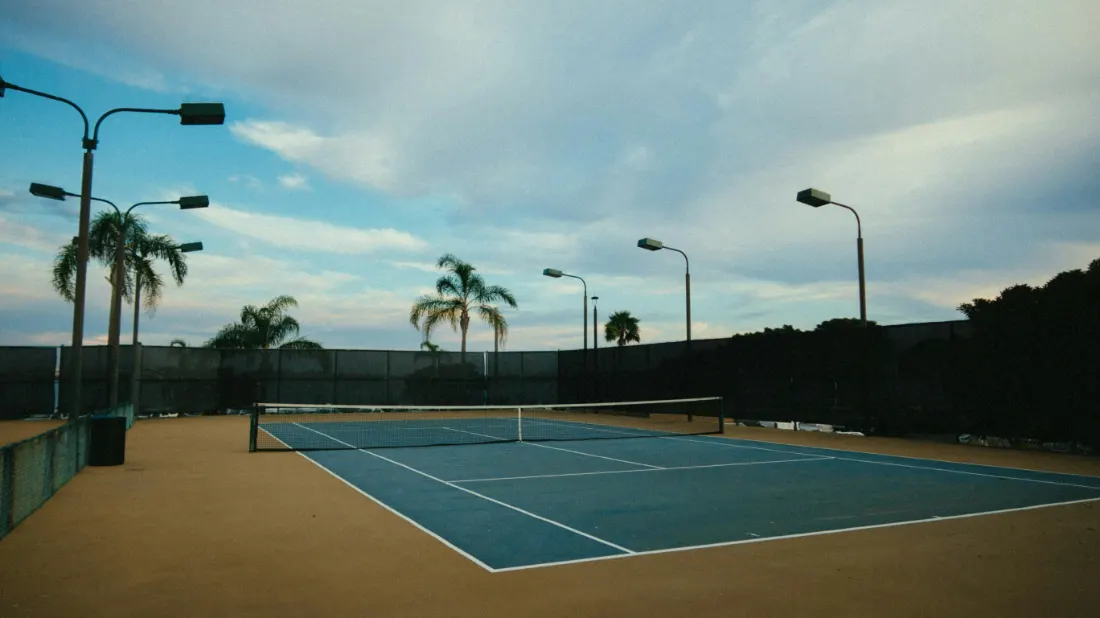
A traditional tennis court is 78 feet long and 36 feet wide for doubles play, which is significantly larger than a padel tennis court size. This difference means that padel courts can fit into smaller spaces, making the sport more accessible in urban areas.
In tennis, the ball is out of play if it goes outside the court. But in padel, the ball can bounce off the walls and stay in play. This leads to longer rallies and allows for unique strategies. The net height in tennis is 3 feet (0.91 meters) at the center, slightly lower than in padel.
Detailed Comparison
Padel Court:
- Length: 66 feet (20 meters)
- Width: 33 feet (10 meters)
- Net height: 34.6 inches (0.88 meters)
- Enclosure: Glass/mesh walls
- Playing style: Wall rebounds allowed
Tennis Court:
- Length: 78 feet (23.77 meters)
- Width: 36 feet (10.97 meters) for doubles
- Net height: 36 inches (0.91 meters)
- Enclosure: Open court, no walls
- Playing style: Ball must stay within boundaries
Strategic Implications
Padel Advantages:
- Space efficiency: Fits in smaller areas
- Extended rallies: Walls keep ball in play longer
- Strategic depth: Wall play adds complexity
- Accessibility: Easier for beginners to keep ball in play
Tennis Advantages:
- Traditional appeal: Established sport with long history
- Power play: More emphasis on strength and speed
- Open strategy: Different tactical approaches
- Professional recognition: Well-established competitive structure
Court Construction and Materials
Surface Types
Artificial Grass:
- Characteristics: Consistent bounce, weather resistant
- Maintenance: Regular brushing and cleaning
- Cost: Moderate initial investment
- Popular for: Outdoor facilities
Synthetic Surfaces:
- Characteristics: Durable, low maintenance
- Maintenance: Minimal upkeep required
- Cost: Higher initial investment
- Popular for: Indoor facilities
Concrete/Asphalt:
- Characteristics: Hard surface, consistent play
- Maintenance: Regular resurfacing needed
- Cost: Lower initial investment
- Popular for: Budget-conscious facilities
Wall Construction
Glass Panels:
- Advantages: Clear visibility, professional appearance
- Disadvantages: Higher cost, potential breakage
- Maintenance: Regular cleaning, occasional replacement
- Popular for: High-end facilities
Mesh Fencing:
- Advantages: Lower cost, durable
- Disadvantages: Reduced visibility, different ball behavior
- Maintenance: Minimal upkeep
- Popular for: Recreational facilities
Planning and Installation Considerations
Site Requirements
Space Planning:
- Minimum area: 25m x 15m for single court
- Recommended area: 30m x 20m for comfortable play
- Access: Clear paths for players and equipment
- Parking: Adequate space for facility users
Environmental Factors:
- Drainage: Proper water management essential
- Wind protection: Consider prevailing wind patterns
- Sun orientation: Minimize glare for players
- Noise considerations: Impact on surrounding areas
Cost Considerations
Construction Costs (Approximate):
- Outdoor court: $80,000-$150,000
- Indoor facility: $200,000-$400,000+
- Wall systems: $20,000-$40,000
- Surface installation: $15,000-$30,000
Ongoing Maintenance:
- Surface maintenance: Annual resurfacing
- Wall maintenance: Regular cleaning and inspection
- Net replacement: Every 2-3 years
- Lighting maintenance: Regular bulb replacement
International Standards and Regulations
FIP (International Padel Federation) Standards
The FIP maintains strict standards for padel court dimensions:
- Court dimensions: Must meet exact measurements
- Net specifications: Height and tension requirements
- Wall specifications: Height and material standards
- Surface characteristics: Bounce and speed standards
Regional Variations
While international standards are consistent, some regions may have additional requirements:
- Safety regulations: Local building codes
- Environmental considerations: Sustainability requirements
- Accessibility standards: ADA compliance where applicable
- Zoning requirements: Local planning regulations
Maintenance and Upkeep
Regular Maintenance Tasks
Daily:
- Court sweeping and cleaning
- Net tension checking
- Wall cleaning (glass panels)
- Debris removal
Weekly:
- Surface inspection for damage
- Net height verification
- Wall stability checks
- Equipment inventory
Monthly:
- Comprehensive surface assessment
- Wall panel inspection
- Drainage system check
- Safety equipment verification
Seasonal Considerations
Spring:
- Post-winter damage assessment
- Surface repair and resurfacing
- Wall panel replacement if needed
- Facility preparation for peak season
Summer:
- Increased maintenance frequency
- Heat-related surface care
- Water management for outdoor courts
- Peak usage management
Fall:
- Preparation for winter conditions
- Equipment storage and protection
- Surface protection measures
- Facility winterization
Winter:
- Indoor facility optimization
- Equipment maintenance and repair
- Planning for next season
- Facility improvements and upgrades
Conclusion
Understanding padel court dimensions is essential for players, facility managers, and anyone involved in padel court construction or maintenance. The official measurements ensure fair play and consistent experience across all levels of competition.
Key Takeaways:
- Standard dimensions are 66 feet x 33 feet (20m x 10m)
- Wall height varies from 10 feet (3m) at back to 6.6 feet (2m) at sides
- Indoor facilities require 19.7+ feet (6m+) ceiling height
- Court comparisons show padel fits between pickleball and tennis in size
- Proper maintenance ensures longevity and safety
When comparing padel to pickleball or tennis, understanding these measurements shows what makes padel unique. The enclosed court design with strategic wall play creates a distinctive playing experience that combines elements of tennis and squash.
Whether you're planning to build new courts, convert existing facilities, or simply want to understand the sport better, having accurate measurements ensures proper setup and fair play. The enclosed nature of padel courts makes them ideal for urban areas where space is limited, while the wall play adds strategic depth that keeps players engaged and coming back for more.
Transform Your Club with PLAI
PLAI is the all-in-one platform that helps padel clubs optimize their facilities, enhance member experience, and grow sustainably. From intelligent court scheduling and member management to automated payments and comprehensive analytics, PLAI gives you the tools to create exceptional experiences that keep players engaged and coming back.